
Prime Days 2026 are expected to generate a surge in sales for Amazon sellers. But while most sellers focus on increasing orders, experienced operators know that the real profitability picture often emerges after the event ends.
Higher order volumes typically bring higher return rates, more customer contacts, additional refund requests, and increased operational costs. That’s why reducing returns on Amazon should be part of every Prime DayPrime Day was initially a one-day sales … More strategy.
Fortunately, Amazon has recently introduced several improvements to Customer Service by Amazon (CSBA), along with expanded return-management options that give sellers greater control over customer service, refunds, and returns. Together, these tools can help sellers protect margins while maintaining a positive customer experience.
Prepare for the Post-Prime Day Returns Wave
Major shopping events create a predictable pattern: increased sales followed by increased returns.
Customers may purchase multiple versions of the same product, make impulse purchases during promotions, or discover that an item doesn’t meet their expectations after delivery. As a result, the weeks following Prime Days often become one of the busiest periods for customer service teams.
This makes returns management just as important as sales generation.
Sellers who actively monitor customer questions, complaints, and return reasons immediately after Prime Days can identify emerging problems before they affect account healthAccount Health is an Amazon page which c… More or profitability. Understanding why customers contact support is often the first step toward reducing future returns.
More Control Over Returns and Fewer Returnless Refunds
One of Amazon’s most significant CSBA improvements gives sellers greater protection against unnecessary returnless refunds.
Under the updated process, refunds without returns are now limited to specific situations, such as late deliveries, damaged non-returnable products, or items that are unsafe to return.
For sellers, this means fewer situations where customers receive refunds while keeping products unnecessarily. It also reduces the need to file SAFE-T claims and helps protect revenue during high-volume periods such as Prime Days.
This change is particularly valuable because increased sales events often generate increased refund activity. Better controls help ensure that refunds are issued appropriately while maintaining customer trust.
Simplify Operations with Automatic Reimbursements
As order volume grows, administrative tasks can quickly become overwhelming.
Amazon now automatically reimburses eligible delivery-related SAFE-T claims for sellers using claims-protected labels through Amazon Buy Shipping or Veeqo. Goodwill refunds issued by Amazon Customer Service are also reimbursed automatically.
These changes reduce manual work and allow sellers to focus on serving customers rather than navigating reimbursement processes.
For businesses handling thousands of Prime DayPrime Day was initially a one-day sales … More orders, even small operational efficiencies can translate into meaningful cost savings.
Choose the Right Return Strategy for Every Product
Reducing returns does not always mean bringing every item back into inventory.
For some low-cost products, return shipping, processing, storage, and removal fees can exceed the value of the item itself.
This is where Amazon’s FBA Returnless Resolutions program can become a strategic advantage.
Sellers can now enroll eligible FBA products and set a returnless resolution threshold between $1 and $75. When a customer requests a return for a qualifying item below that threshold, Amazon may issue a refund and allow the customer to keep the product.
Eligible products exclude categories such as hazmat items, recalled products, gift cards, heavy and bulky products, and items with an average selling price above $75.
While Amazon’s updated CSBA policy reduces unwanted returnless refunds, FBA Returnless Resolutions gives sellers the ability to intentionally use returnless refunds when they make financial sense.
The distinction is important.
Successful sellers focus on minimizing unnecessary refunds while also reducing the costs associated with processing low-value returns. During Prime Days, when return volume often increases, having a product-specific return strategy can help preserve margins.
Use AI-Powered Customer Insights to Reduce Future Returns
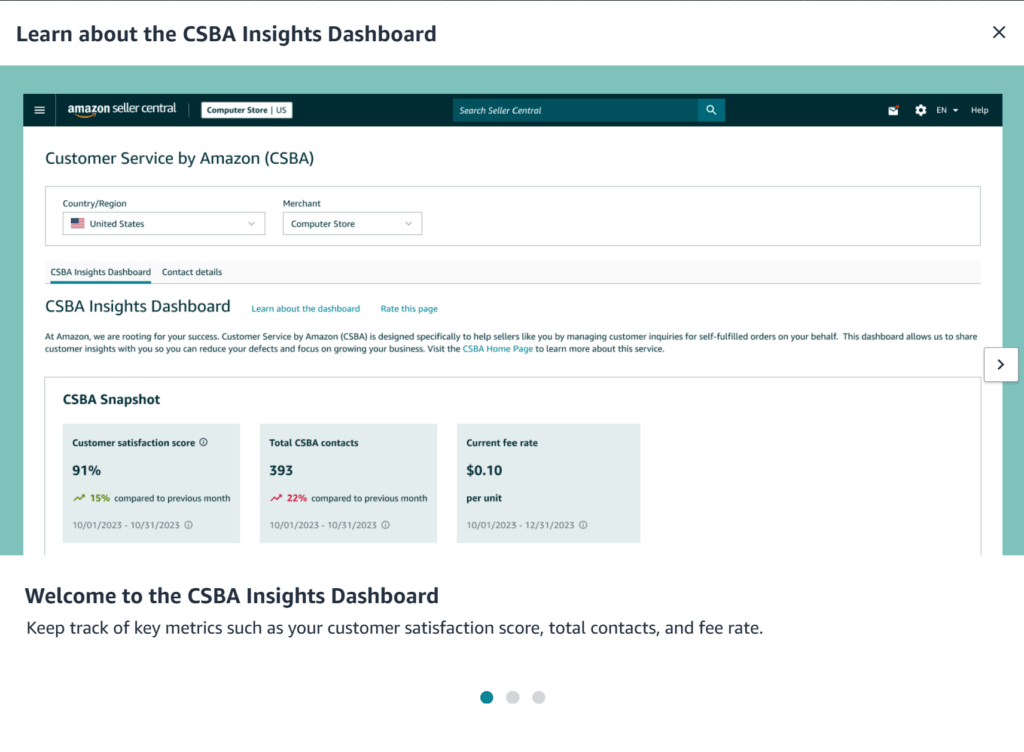
Amazon’s latest CSBA enhancements also include improved AI-generated customer contact insights.
The CSBA Insights Dashboard now provides more detailed contact reasons, helping sellers understand exactly why customers are reaching out.
Combined with daily Contacts per Unit (CPU) monitoring, sellers can identify patterns such as:
- Confusing product descriptions
- Missing product information
- Packaging problems
- Delivery-related issues
- Product quality concerns
These insights can be used to improve listings, update images, refine packaging, and optimize fulfillment processes.
Reducing returns often starts long before a customer initiates a return request. The better sellers understand customer concerns, the easier it becomes to prevent dissatisfaction altogether.
Reducing Returns Is Really About Protecting Profit
Prime Days may be one of the biggest sales opportunities of the year, but long-term success depends on what happens after the orders are placed.
Amazon’s latest Customer Service by Amazon improvements help sellers reduce unnecessary returnless refunds, automate reimbursements, centralize communications, and gain deeper insight into customer concerns. At the same time, programs like FBA Returnless Resolutions give sellers greater flexibility to manage low-value returns strategically.
Together, these tools create a more balanced approach to returns management.
The goal isn’t simply to reduce returns. It’s to reduce avoidable costs, improve customer satisfaction, and protect profitability. Sellers who combine customer insights with smarter return strategies will be better positioned to make the most of Prime Days 2026—and keep more of the profits they earn.
D
T

Amazon seller advocate, and content lead at SellerEngine, Elena helps sellers cut through the noise with practical advice and powerful tools.